

Your service lead now reads two customers
The person in your organisation who knows the customer best is now reading someone who was never born. Your service lead has spent years learning to hear the difference between an angry caller and a frightened one. This quarter, part of her queue is filled by software that speaks on a customer's behalf, and it sounds calm no matter what is going on behind it.
She has not told you this yet, because it arrives in fragments. A chat that asks three questions in one sentence. A request that arrives fully structured, at three in the morning, in perfect language. A caller who says "my assistant already checked this".
The five lenses she uses every day
She reads every customer through five lenses, and she does it without naming them. Need and emotion. Generation. Psychology. Channel and trust. Life moments. That is how she decides whether to solve the problem in thirty seconds or to slow down and stay on the line.
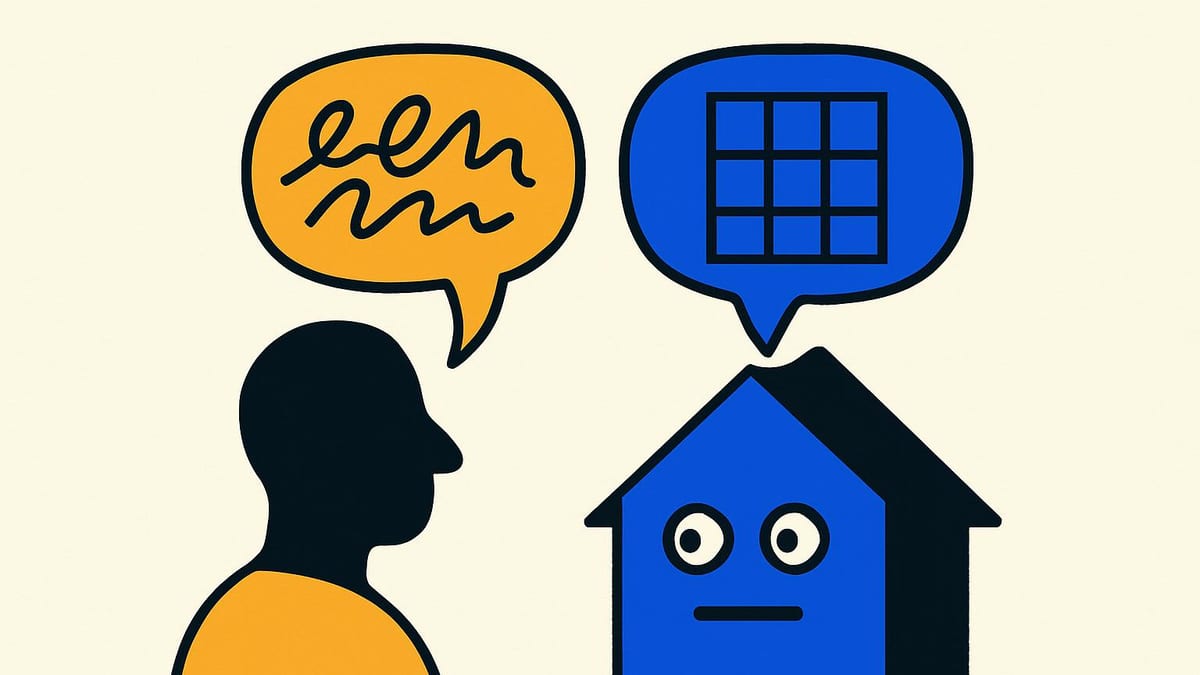
Those five lenses still work. What changed is that behind each of them sits a second reader. The agent has no emotion, no life moment and no patience for your menu structure. It reads your terms, your form and your response time, and it reports back to the human who sent it.
The second reader has different manners
An agent never gets tired, never gets embarrassed and never gives up halfway. It will ask the same question through four channels until it gets one clean answer. Your service lead sees this as duplicate traffic. Your dashboard sees it as volume.
Both readings matter for her week:
- The human wants to feel understood.
- The agent wants your information to be machine readable.
- The human judges you on tone.
- The agent judges you on consistency across channels.
The same customer now arrives twice, and only one of them can be soothed.
The numbers landing in her queue
About three quarters of Gen Z actively use generative AI, and four in five millennials used it in the past year. Three quarters of those millennials say it improves their efficiency. That is the caller who already has an answer and is checking yours against it.
The other end of the queue
Among early boomers who do not use the tools, one in three says they do not understand them well enough. Your service lead handles both groups on the same day, with the same script.
And passive adoption runs about three times ahead of active use. Most of your customers are already being served by AI inside other products without ever choosing it. They have a standard for speed and precision that they cannot explain to her, and they hold you to it anyway.
Her quarter is measured on the wrong thing
She is judged on average handling time, and both readers push that number the wrong way. Agent traffic inflates contact volume. Confused customers need longer conversations. She can protect her score by answering fast and shallow, and you will see a good quarter followed by a churn problem you cannot trace.
Give her a second number that counts resolved intent across all channels for the same household. That makes the duplicate traffic visible as one customer instead of three tickets.
Give her the right to change something
She already knows which forms the agents choke on, because she cleans up after them every day. She needs the authority to fix the wording, publish a machine readable version of your policies and route agent traffic to its own lane.
Put her in the room where the AI roadmap is set. Her queue is your earliest signal, weeks ahead of your research.
What you do on Monday
- Sit with your service lead for one hour and ask her what has changed in her inbox since January.
- Ask her to flag every contact that came from an assistant rather than a person, for two weeks.
- Give her one metric that follows the customer across channels, next to handling time.
- Hand her the right to rewrite the three documents that agents read most.
- Invite her to the next session where the AI roadmap is decided.
That hour with your service lead gives you a sharper picture of your customer than most research does. Chapter one of CX+AI works through all five lenses and shows what each one looks like when an agent is doing the reading. The AI Decision Rights template helps you put the authority where the signal already is. See the materials.