
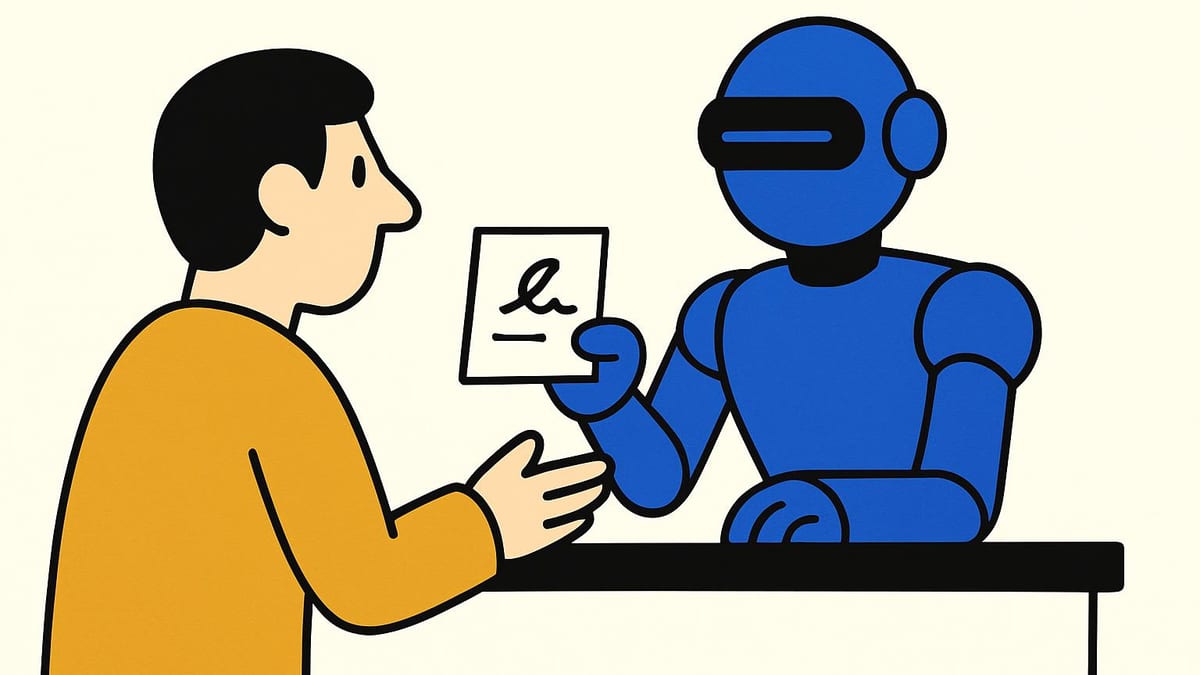
A chatbot at Air Canada told a customer about a bereavement discount the airline did not offer, and the tribunal decided the airline was bound by it. What your agent says, you said. That one ruling moved the governance conversation out of the legal department and onto the service floor, where the promises actually get made.
This is the second of two pieces on this chapter. The first one laid out the case; this one is about the work that follows. Most leaders respond to a story like that by slowing their agents down, adding an approval layer, and parking the pilot for another quarter. There is a faster route, and it starts with writing down what the agent is allowed to say yes to.
Guardrails are how you hand over work
An agent only gets real authority inside an organisation that can be held to what it says. That is the lesson of the Air Canada ruling, and it points the other way from the usual reflex. The airline was held to the promise because the promise came from the airline. The problem was never the speed of the bot. It was that nobody had decided, in advance and in writing, which discounts existed.
Once that decision exists, you can let the agent act. It can refund, rebook, apologise and compensate inside a boundary you set, and you can live with the outcome because you wrote the boundary yourself.
An agent borrows its authority from the organisation standing behind it.
Write down what it may promise
Take your three most common service requests and write the limit for each one on a single page. Use the limits your human staff already work with, because those have survived contact with real customers and real finance reports.
For every promise the agent can make, answer three questions:
- What may it approve on its own, and up to which amount or which exception?
- What does it hand to a person, and within how many replies?
- Who signs off when that boundary moves?
One page, three columns, reviewed by the manager who owns the policy. That page is the difference between an agent that can act and an agent that waits for permission on every turn.

Give every promise an owner
A boundary with no name attached to it drifts within weeks. The manager who owns the refund policy owns the sentence the agent uses about refunds. Same person, same mandate, same review meeting. That keeps governance inside the business instead of in a separate committee that meets once a quarter and reads summaries.
Build a reading rhythm into the job. Every fortnight, the owner reads a sample of real conversations where the agent said yes, and a sample where it handed over. Two hours, no dashboard. You will see the gap between the policy and the promise long before a customer takes you to a tribunal.
Log what was promised, not just what was answered
Your transcript needs to show the commitment the customer walked away with. When a complaint arrives six weeks later, that record is what lets you settle it in a day.
Trust is the thing you are selling
Customers hand authority to the companies they expect to stand behind the answer. The moment an agent books, pays, cancels or compensates on your behalf, your dependability stops being a soft value and becomes the reason the transaction happens at all. Air Canada paid for that lesson in public. You can buy it cheaper by writing your limits down first.
What you do on Monday
- Pick your three highest-volume service requests and write the approval limit for each on one page.
- Put a name next to every limit, and pick the person who already owns that policy.
- Set a fortnightly hour where that owner reads real conversations in which the agent said yes.
- Check that your logs record the promise made, not only the reply sent.
- Expand the agent's mandate one request type at a time, once the first three run clean for a month.
If you want the page and the review rhythm already set up, the CX+AI Risk & Guardrails material gives you the limits table, the owner roles and the escalation rules in a format you can fill in with your own policies. The chapter behind this article sits in the book, together with the operating model that holds it in place. Bekijk de materialen