
What you buy when you buy AI
A business owner slid a quote across the table and asked me one question: when does this pay for itself? The quote was for an AI assistant in customer service. Nineteen seats, a yearly licence, four weeks to go live. He had already worked out the saving per ticket and written it in a spreadsheet, in one cell, once.
That cell is the misconception. It treats the payoff as a fixed amount that lands on installation day and stays flat forever. The money in AI sits somewhere else, and it behaves differently.
The promise in the quote
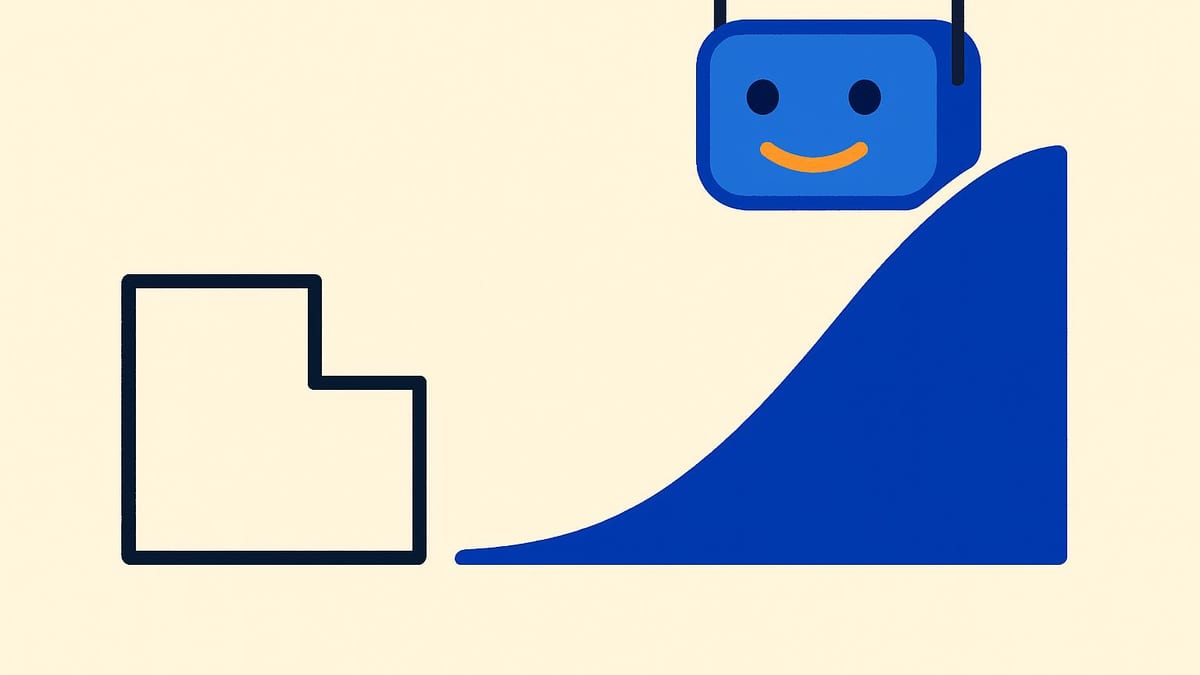
The quote priced a tool, and he read it as a plan. Installing something buys you this year's cost base. You pay less per conversation, your people handle a few more, and the line on your dashboard drops a step and then runs straight.
That step is real. It is also the smallest part of what is on the table, because a step happens once and then stops being news.
This year's cost, next year's slope
Integrating the thing buys you the rate of improvement, and improvement compounds. The assistant learns from your own conversations, your team learns where to trust it, and the work gets redesigned around what it does well. Each quarter starts higher than the last one.
Integration is slower and duller than installation. It means picking one journey, naming which decisions the assistant may take on its own, and deciding who reviews the ones it gets wrong.
A licence lowers this year's bill. Integration changes the angle of the line.
What agile already showed us
We have run this experiment before, and it was called agile. Roughly seven out of ten agile transformations failed. Teams got stand-ups, boards and a new job title, and the way decisions were made stayed exactly where it was.
McKinsey puts the gain from a transformation that genuinely changed how a company works at around 30 percent. The same split shows up with journey mapping. Companies that drew the maps got posters. Companies that rewired around the maps got customers who stayed.
Five thousand support agents
The best evidence we have comes from a study where the assistant was given to people instead of used to replace them. Brynjolfsson, Li and Raymond followed 5,172 support agents who worked alongside an AI assistant. Productivity rose by about 15 percent.
The interesting part sits underneath that average, and it matters most for a company without a data team.
The newest people gain the most
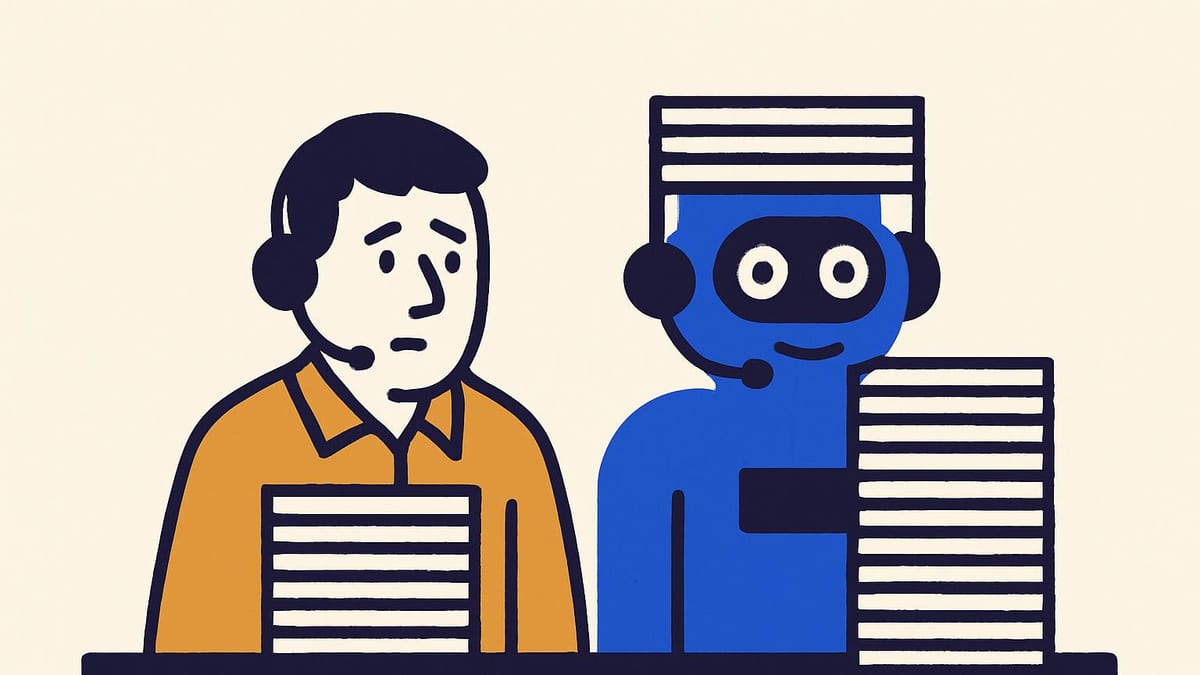
The least experienced agents got roughly 30 percent better. The assistant carried what the veterans already knew and handed it to the people who had been there three weeks.
Two other things moved in that study, and both of them show up in a small company faster than in a large one:
- Escalations went down, so fewer conversations reached a manager.
- Turnover went down, so the training you paid for stayed in the building.
What you do on Monday
Buy the licence, and plan the twelve months behind it. The spreadsheet cell gets replaced by a slope, and the slope is yours to build.
- Pick one journey where your newest people struggle most, and start there.
- Write down which decisions the assistant may make alone, and which ones a person signs off.
- Give it to your least experienced colleague first, and ask them weekly what it got wrong.
- Measure escalations and first-year turnover next to cost per contact.
- Book one hour every quarter to redesign the work around what the assistant now handles.
The owner with the quote went live four weeks later, and the second year is where his numbers started moving. The AI Ready Check walks you through the same questions before you sign anything, and CX+AI covers what to do with the twelve months after. View the materials.