
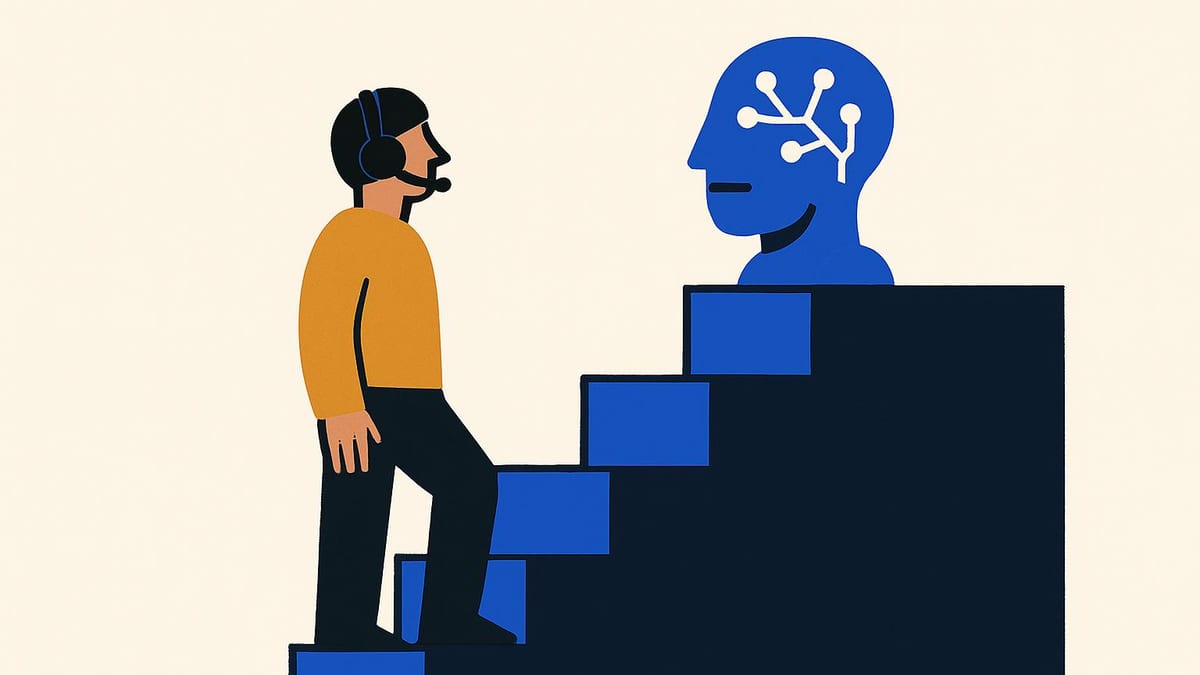
What the roadmap asks of a team lead
You lead fourteen people who answer customer questions all day, and the transformation roadmap runs straight through your team. Five levels, four climbs between them. Each climb has its own actions, its own owners and a test you have to pass before you move up.
Part one of this series laid out what those five levels look like. This part is about your Monday. Most of what the roadmap asks happens on the floor, in the hands of the person who runs the daily stand-up.
The climb you are on right now
Find your climb first, because the work on each one is different. The four of them, in order:
- Deciding: a matter of weeks, with named owners and a clear yes.
- Connecting and governing: six to twelve months of data, access and decision rights.
- Redesigning and becoming callable: one to two years, and four out of five organisations stop here.
- Letting the system learn: this one never ends.
Write on a sticky note which climb your company is on. Ask your director what the exit test is. Plenty of teams work hard on climb three while the organisation has yet to finish climb one, and that is where the energy goes missing.
The first climb is decided in weeks
Your contribution to the fastest climb is evidence from the floor. A decision gets made quickly when someone puts real material on the table: the five questions your team answers most often, the handling time per question, the three moments where customers call back because the first answer missed.
That material exists in your team already. Collect it in an afternoon and send it up before anyone asks.
The person who brings the numbers from the floor sets the agenda in the room above.
Connecting and governing is about who may decide
Six to twelve months of this climb goes into questions that sound administrative and determine everything. Who may approve a refund. Which systems an agent is allowed to read. What happens when the model is unsure.
You know the answers better than anyone, because your team improvises them daily. Every exception one of your people handles by hand is a specification waiting to be written down. Keep a list for four weeks. Hand it to whoever owns the guardrails.
Where four out of five stop
The third climb asks you to make your team's work callable, and that is why it takes one to two years. Callable means another system can ask your process for an answer and get one, without a human in between for the routine cases.
The work instruction in your handbook is written for a person who can fill in the gaps. Rewrite one of them, the most frequent one, so that every step is explicit: input, rule, output, what to do when the input is incomplete. Do one instruction a week with the colleague who knows that process best. In a quarter you have a dozen.
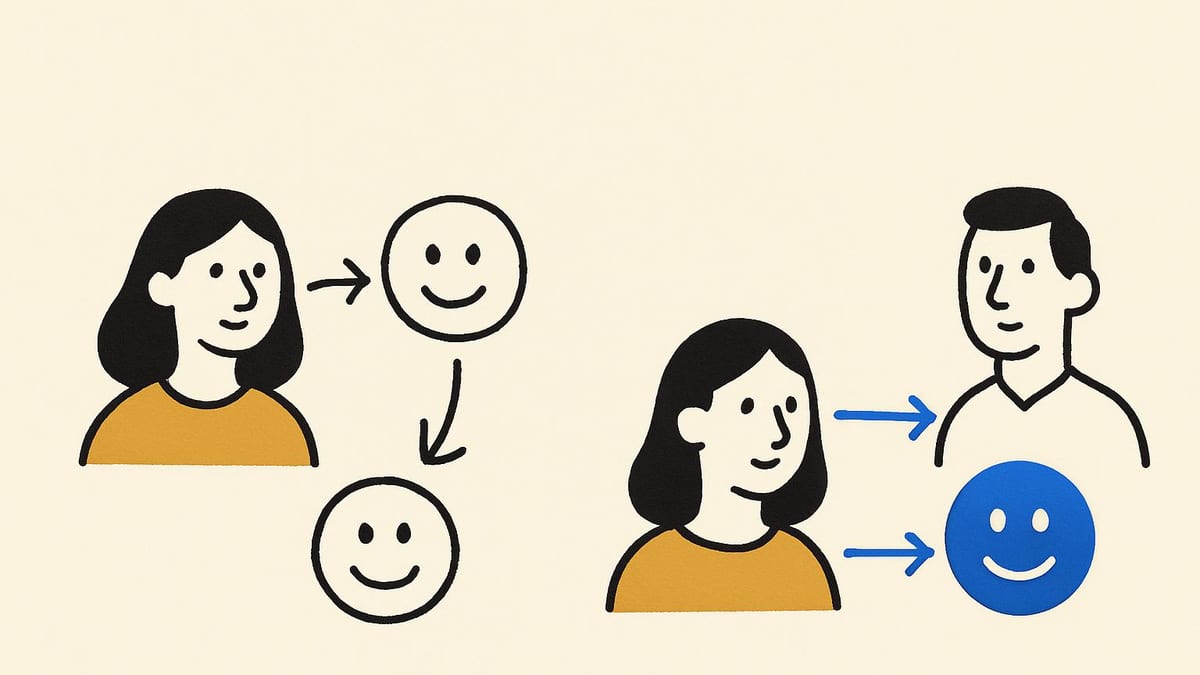
Absorption time is the number to watch
Measure how long it takes from a tool being available to it running safely in your team's daily work. That is the absorption time, and the roadmap moves it from the pace of a budget cycle to a matter of weeks.
Keeping it there is a people job. The anchoring kit is what holds it:
- An academy and certification, so skill is visible instead of assumed.
- Onboarding that includes the new way of working from day one.
- Roles and career paths that reward the people who build the new process.
- Measurement, recognition and a view of where this leads for them personally.
What you do Monday
- Ask your director which of the four climbs the company is on, and what the exit test is.
- Pull the five most frequent customer questions from last month and the handling time for each.
- Start a four-week list of every exception your team solves by hand.
- Rewrite your most-used work instruction so a machine could follow it.
- Pick one person in your team who wants to lead this, and give them an hour a week for it.
The roadmap works best when the person running the team can see the whole climb, including the parts owned by someone else. The AI Transformation Roadmap lays out the five levels, the four climbs and the exit test for each one, in a form you can take into your next meeting. See the materials.