
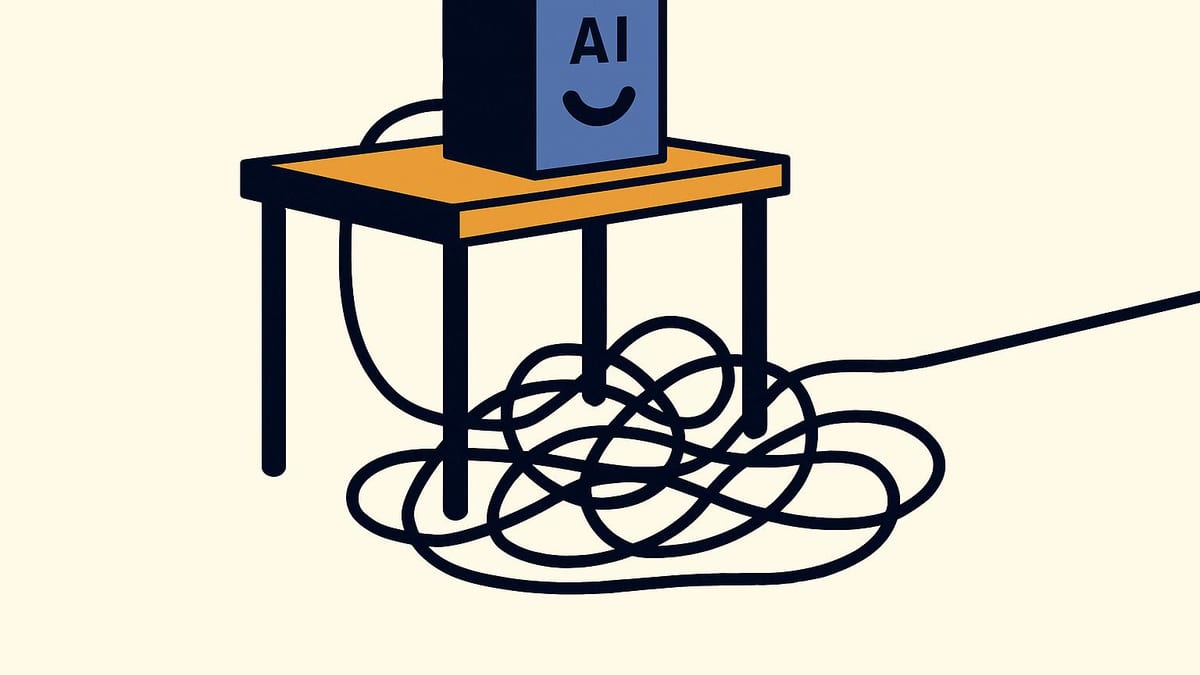
The tool is the cheap part
Most rollouts end the week the licences are handed out. Everyone has access, the invoice is paid, the adoption dashboard turns green, and the work itself looks exactly like it did three months earlier. The tool arrived. The company did not move.
This is the second of two pieces about the great divide. The first one laid out the difference between installing something and integrating it. This one is about what you do on the ground once you accept that difference.
What the licence buys you
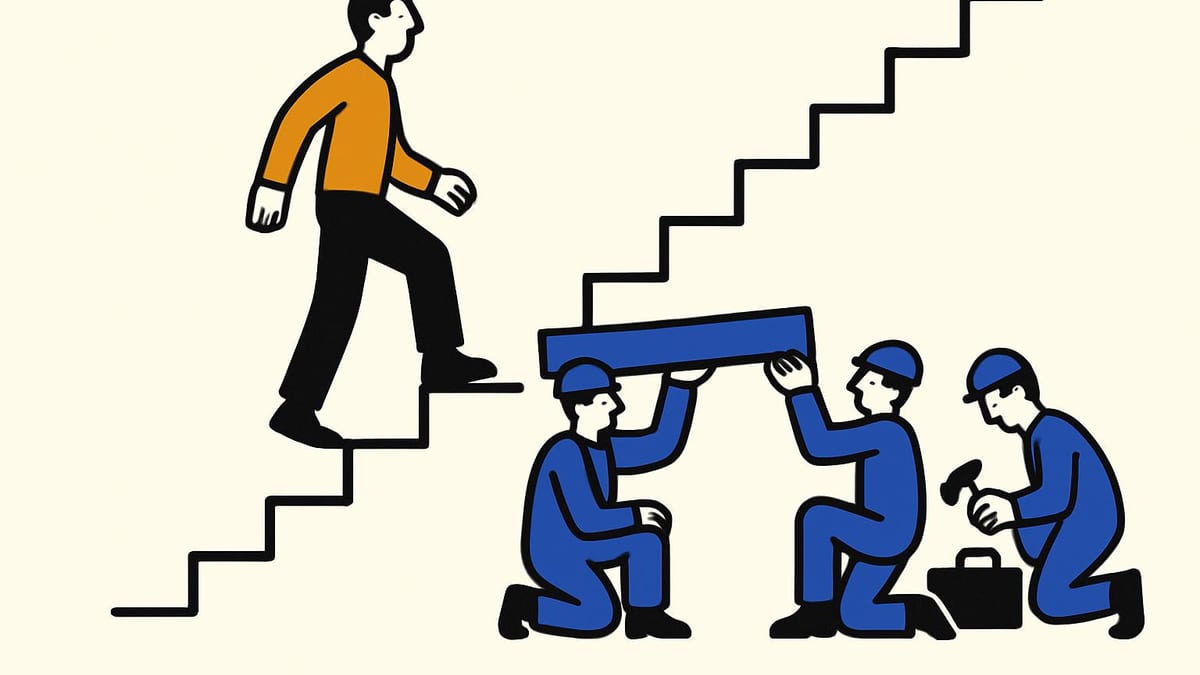
Installing buys you this year's cost base. Integrating buys you the rise, and a rise compounds. A one time saving lands once and then sits there. A rate of improvement keeps paying, and it gets larger every year you leave it running.
That is why the purchase decision is the small decision. The large one is what you change in the work so the assistant has somewhere to stand.
A rate of improvement beats a one time saving within a few years, and the gap keeps widening.
The 5,172 support agents
Brynjolfsson, Li and Raymond studied 5,172 support agents who were given an AI assistant instead of being replaced. Productivity rose by roughly 15 percent. The least experienced agents got about 30 percent better. Escalations went down. So did turnover.
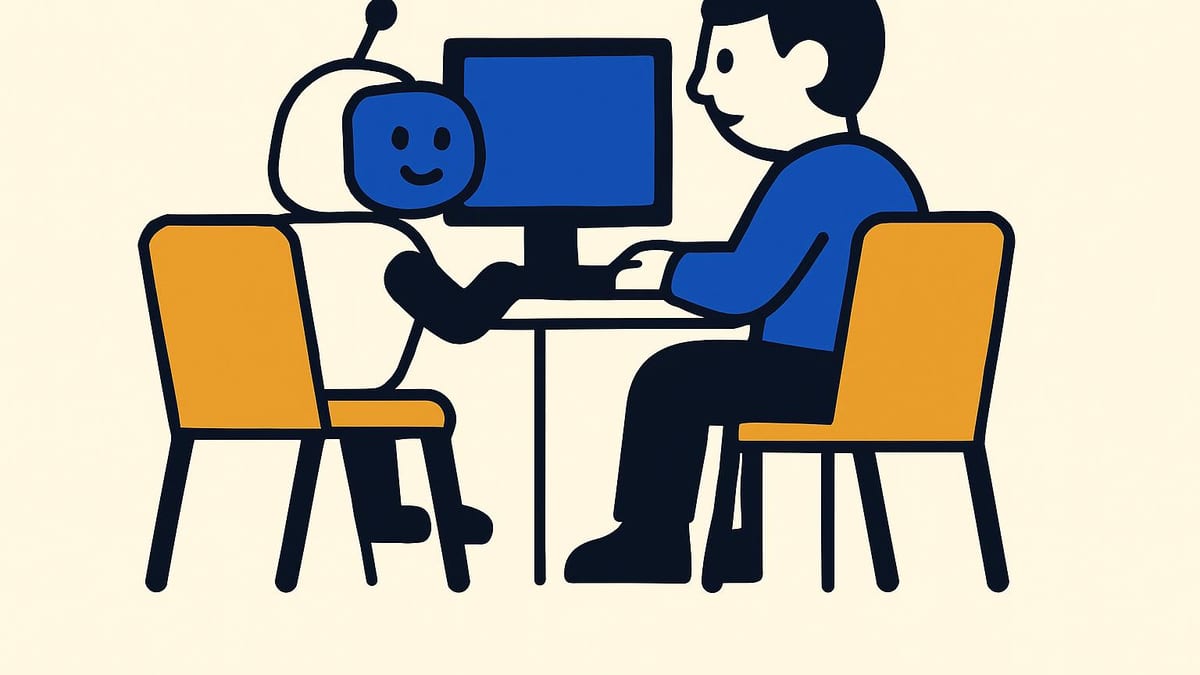
Read that result carefully, because the design is the finding. The assistant sat next to the person, inside the live conversation, suggesting what an experienced colleague would say. The newest people gained most, because the assistant carried the knowledge they had yet to build. Nobody was handed a chatbot and told to figure it out.
The Agile rerun
We have run this experiment before, and we have the numbers. Roughly seven in ten agile transformations fail, while McKinsey puts the gain of a real one at around 30 percent. The failures installed the ceremonies. Stand ups, boards, sprint names. The decision rights stayed exactly where they were.
Journey mapping went the same way in plenty of companies. Beautiful maps on the wall, identical handoffs behind them. AI is the third round of the same test.
Build the work around the assistant
Pick one step in one journey and rebuild that step with the assistant in it. Not the whole function, not a centre of excellence, one step where a person does something repeatedly and a delay is visible.
- Put the assistant inside the flow the person already works in, so nothing has to be copied across screens.
- Give it to your newest colleagues first, because that is where the biggest gain showed up in the study.
- Decide in advance what happens with the time that comes free, and write it down.
- Review once a week what the assistant got wrong, and feed that back into the prompts, the content and the process.
Measure the rise
Track one number every month and look at the line, not at this month's value. Handled volume per person, first contact resolution, time to competence for a new hire. A flat line after three months tells you the tool was handed out and nothing else changed.
Escalations and turnover deserve a place on that list too. Both moved in the study, and both cost you real money long before a productivity number does.
What you do on Monday
- Choose the one journey step you will rebuild, and name the person who owns it.
- Put the assistant where the work already happens, inside the existing screen or queue.
- Start with your three newest colleagues and watch their ramp up time.
- Book a thirty minute review every Friday to correct what the assistant got wrong that week.
- Agree now what you do with the capacity you free up, so the gain lands somewhere visible.
Rebuilding one step is a good start, and the question that follows is which steps come after it and in what order. The CX+AI Transformation Roadmap lays out that sequence, from a first integrated step to an operating model that keeps improving. View the materials.