
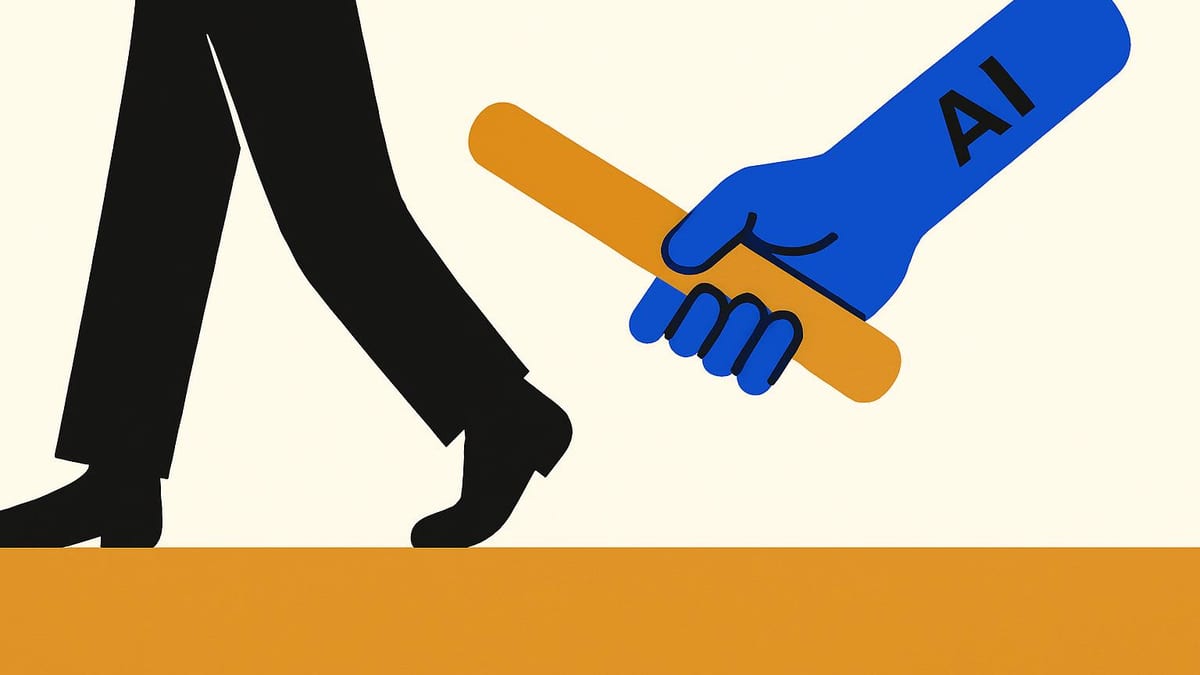
The new way has to survive you
A transformation has succeeded when the new way of working survives the departure of the people who pushed it. As long as adoption depends on one enthusiastic director and two volunteers, you have a pilot with good energy. Nothing more.
Part one of this series laid out the five points where AI breaks classic change management: the pace, the rational self-interest of your people, the shadow adoption that already started, the invisible burning platform and the missing target group. This part is about the work itself. Two ways of running a change, side by side, and the point where one stops working.
The rollout of yesterday
The old way starts with a decision and ends with a training calendar. You select a platform, write a plan, announce it at a town hall, train everyone in one quarter and then measure how many people logged in. It worked for systems that only did something once everybody used them.
AI behaves differently. People in your teams are already using it, in their own accounts, without telling you. The change has begun, and your plan arrives as the second mover. Announcing a start date for something that started months ago costs you credibility you need later.
The sequence of now
Adoption follows an order, and skipping a step costs you the step after it. Run it like this:
- A North Star that says what the customer gets out of this, in one sentence.
- A small start, with one team and one real customer problem.
- A sponsor with budget and a diary slot, present at the review.
- One success story with a number and a name attached to it.
- Noise about that story, in every channel you own internally.
- The early adopters, given time and a title for the work they already do.
- Colleagues outside that group who tell the story for you.
- Scale, last.

Scale is the reward for a story that already travels on its own.
Show it, do it together, do it alone
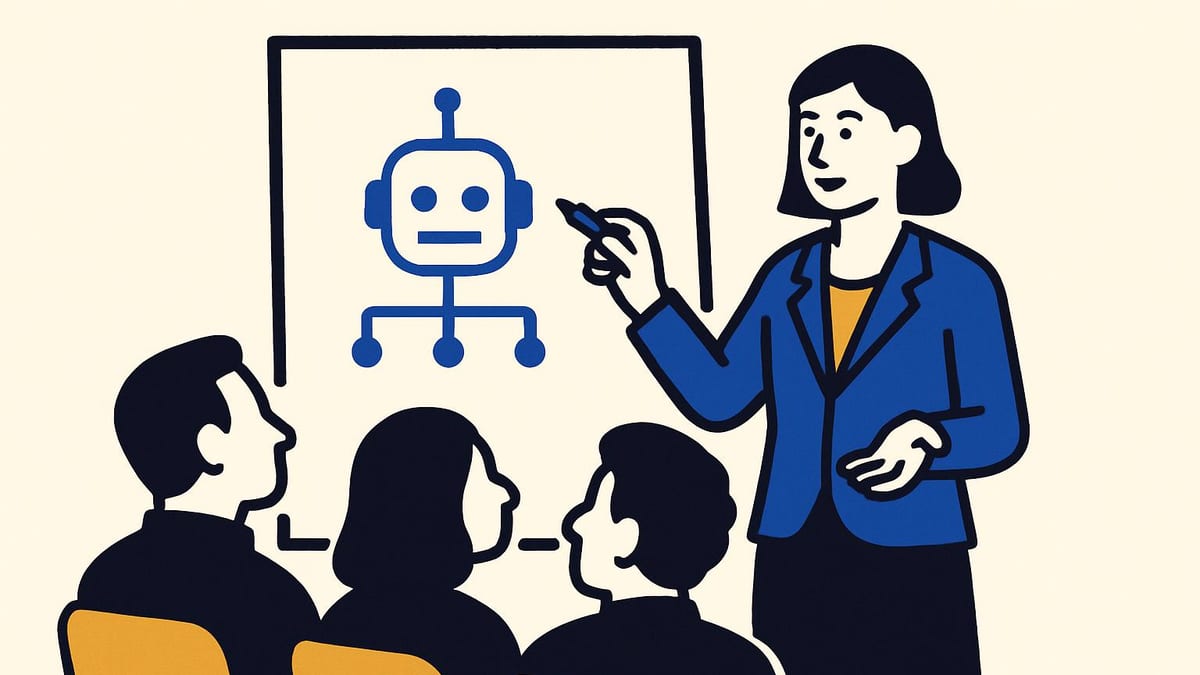
Adoption is a mechanic with three moves: you show it, you do it together, they do it themselves. A slide about prompting teaches nobody anything. Sitting next to a claims handler while she reworks her own case with the tool teaches her in twenty minutes.
Book three sessions per team, not one. In the first you work, they watch. In the second you share the keyboard. In the third you are in the room and quiet. After that they teach the next team, which is when the thing starts paying for itself.
The frozen middle leads
Ask the layer with the most to lose to run the adoption, and give them something to win. Middle managers see the pattern faster than anyone: their coordinating work is the part a model handles well. Left alone with that thought, they slow the work down politely and with excellent arguments.
So give them the role. Let them own the customer outcome in the North Star, chair the review, present the result to the board. Their expertise about how the work really flows is what turns a demo into a process.
Scale last
The moment to scale arrives when other teams ask for it. You will hear it in the corridor before you see it in a dashboard. Until then, keep the circle small, keep shipping results and keep telling the story with names in it.
Handover is the real finish line. Write down who runs the ritual, who owns the budget line and who trains the next team once you stop showing up. Then take a week off and watch whether it holds.
What you do on Monday
- Write the North Star in one sentence and test it on someone in a customer-facing role.
- Pick one team and one customer problem that costs money today.
- Ask your sponsor for a recurring thirty minutes, and get it in the diary.
- Give two middle managers a named role in the adoption, with a result they present themselves.
- Plan the three sessions: show it, do it together, let them do it.
You now have the sequence. The book CX+AI works it out per step, with the traps at each handover and the questions to ask your sponsor before you start. The AI Transformation Roadmap gives you the same sequence on one page, ready to fill in with your own teams. Bekijk de materialen