

A managing director turned his screen towards me and then wished he hadn't. On it was the usage report of the AI suite he had rolled out to everyone the year before. He had expected a graph that climbed. What he got was a line that lay down on the first week and stayed there.
His question was the one I hear most often from owners who run a company without a data team of their own: did we buy the wrong tool? The tool was fine. What sat underneath it had never been built.
What the usage report said
Three quarters of the AI licences that organisations pay for stay unused. That is the number we put in CX+AI, and it is the number that shows up on almost every dashboard I get to see. The invoice arrives monthly. The seats stay empty.
Most leaders read that line as a people problem. They schedule another training session, send another internal newsletter, appoint an enthusiast as ambassador. The line stays flat, because the thing that keeps people out of the tool has nothing to do with enthusiasm.
A seat nobody opens still appears in your budget every month.
What people were using instead
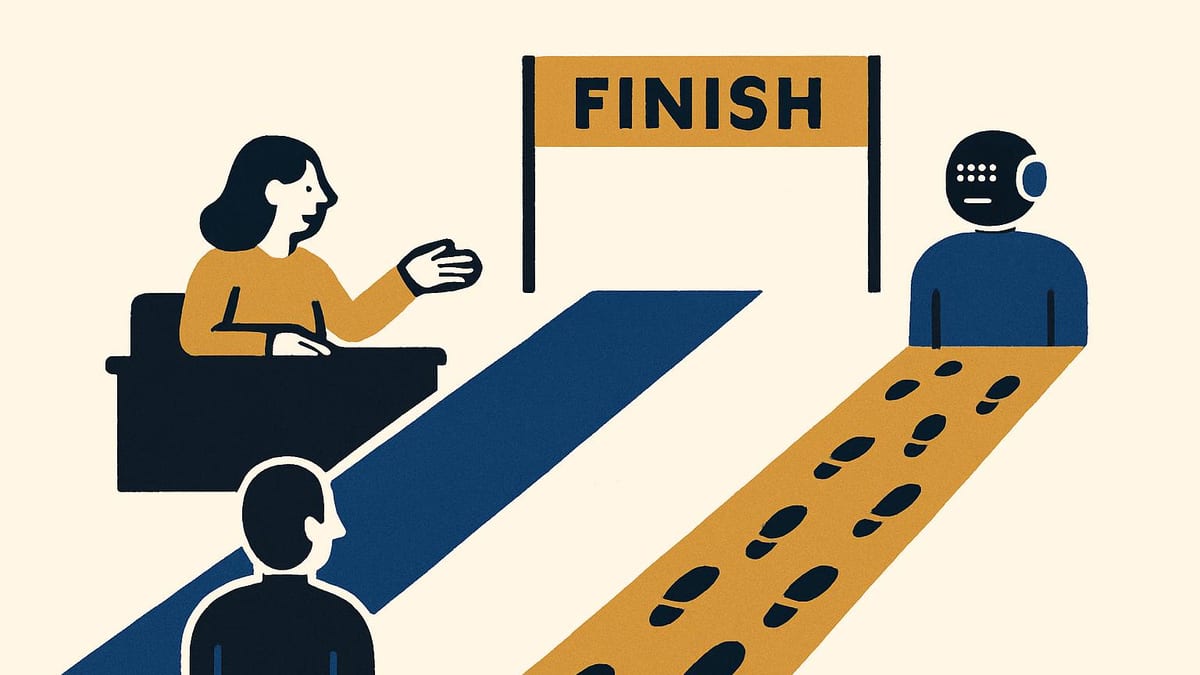
Ask the same people what they used that week and the answers come fast. Actual usage of self-chosen tools runs two to three times higher than usage of the tool you paid for. That is shadow AI: your team working with their own accounts, on their own phones, outside your agreements, with your customer data in the prompt.
Read it as a demand signal rather than a discipline problem. Your people want the help. They found a route to it that is faster than yours. In that managing director's company, the sales team had been drafting quotes with a free assistant for months, and nobody had asked them to stop or to share how they did it.
Six blocks that multiply
AI results come from six blocks, and they multiply instead of adding up.
- strategy: what the AI is for, in terms of a customer outcome
- data: what the model may see and what it may not
- way of working: who does what, in which step of the process
- governance: who decides, who checks, who carries the risk
- technology: the tool itself and what it connects to
- culture and skills: whether people trust it enough to use it
Score each block from zero to five and do the multiplication. Five on technology and zero on way of working gives you zero. One empty block flattens the whole result, which is exactly what that dashboard was showing. The purchase was real. The rest of the system was still a plan.
The zero you can find this week
You can locate your own zero in an afternoon, with people you already employ. Pick one customer-facing process, say quote to order, and walk it with the three people who actually run it.
Ask them where they would use AI tomorrow, where they already do, and what stops them from doing it in the tool you bought. The answer is usually one blocked step: a login nobody granted, a rule nobody wrote down, a question about customer data nobody dared ask out loud.
Fix that one step and the line on your dashboard starts to move the same week.
What you do on Monday
- Pull your AI usage report and write down the percentage of seats in active use. Share that number with your management team.
- Ask your team, with no consequences attached, which AI tools they already use and for which task. Write every answer down.
- Score the six blocks from zero to five for one customer process, and do the multiplication out loud.
- Take the lowest block and assign one owner with one deadline this month.
- Set a simple rule for customer data in AI tools, in one page, so shadow AI can come into the light.
That managing director now looks at a different number every month, and it climbs. The CX+AI Maturity Check takes you through the same six blocks in a morning, with questions you can answer without a data team. It tells you which block is your zero and what it costs you to leave it there. See the materials.