
The forties in your chat logs
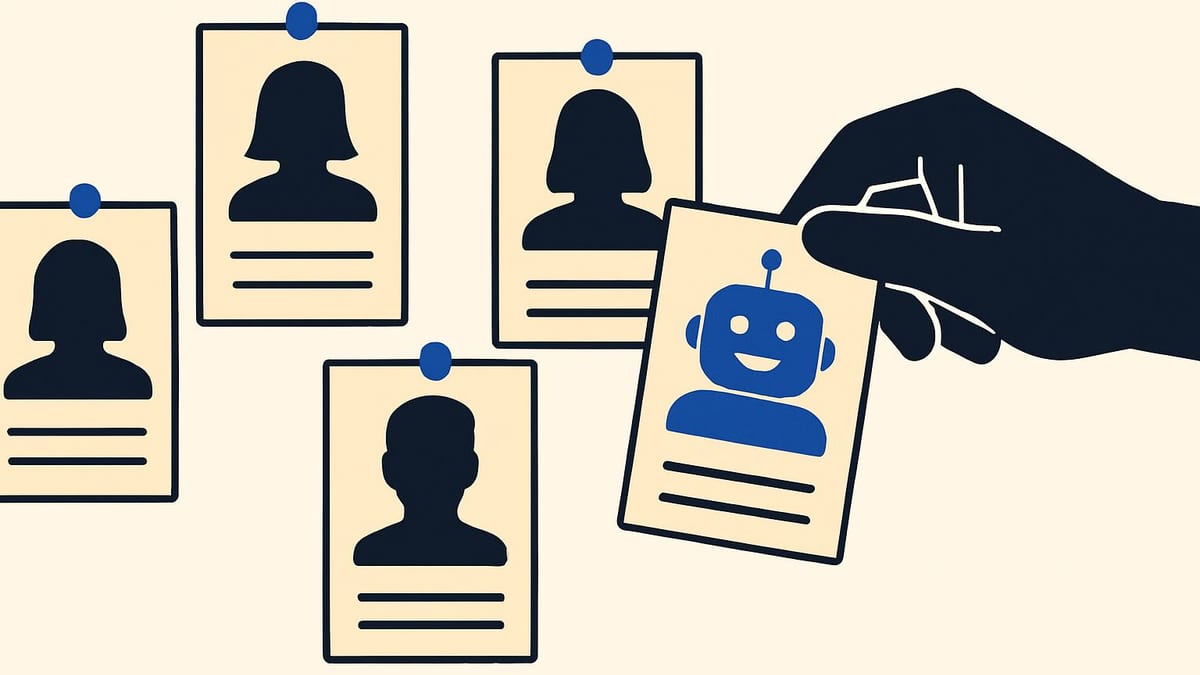
I sat in a journey session where the team split the new chat entry point in two before anyone had opened a transcript. The young persona on the wall got the AI assistant. The older persona got the phone number, a shorter menu and a longer wait. Everyone nodded. It took four minutes.
That split came from a research round done a year earlier, turned into two laminated cards, and then treated as a fact about customers. Adoption had moved in the meantime. The cards had not.
The split on the wall
The design decision was made before the workshop started. Most of the team's energy went into the young lane: tone of voice, fallback flows, handover rules. The other lane got a line in the minutes.
Watch where your team puts its attention in a session like that. The lane that gets the whiteboard time is the lane that gets the budget, and the lane that gets the budget is the one your customers will actually experience.
Where the assumption came from
Personas get written once, refreshed once a year at best, and then quoted for three years. They were accurate on the day they were made. They describe the behaviour of a customer who has since changed how he solves problems.
What adoption actually did
Gen X ramped up their use of AI chatbots over the past year faster than Gen Z or the millennials, and only Gen Alpha moved quicker. The fastest adopters are people in their forties.
That makes sense once you look at what a forty-something does in a day. He has a mortgage question, a tax letter, a kid with homework and a work deadline. An assistant that answers in two sentences saves him an afternoon. Teenagers play with the technology. People in their forties put it to work.
The persona on your wall is a year old. Your customer updated last month.

Read your own logs
Your chat transcripts are the fastest customer research you own, and you already paid for them. One week of logs, three people, two hours in a room. That beats a quarterly report that lands six weeks after the fact.
Look for these things:
- Where customers return. Repeat use within the same week tells you the assistant solved something real.
- Where customers give up. Count how many drop out within the first four messages.
- What people type in their own words, before your menu reshapes the question.
- Which questions arrive at the same hour every day. That is a process problem, not a channel problem.
Multiplier, not addition
AI pays off where it multiplies work you already do well. Bolting an assistant onto the website as an extra channel adds one more place for a customer to get stuck. The same assistant becomes a multiplier when its transcripts feed the journey team every week, when its failed answers become next sprint's content backlog, and when its handovers reach a human who can already see what was said.
That is the difference between a tool and a system change. One sits next to your journey. The other changes what your journey team knows on Monday morning.
What you do on Monday
- Pull one week of chat transcripts and read fifty of them out loud with your team.
- Date-stamp every persona in your deck and mark the ones older than twelve months for a refresh.
- Open the oldest customer segment first when you design your next AI touchpoint, and give it the same design hours as the youngest.
- Set a weekly thirty-minute slot where someone reports what the assistant failed to answer.
- Give one person the job of turning those failures into backlog items with a name and a deadline.
The journey session I described went differently once we opened the logs. If you want a structured way to do that with your own team, the CX+AI book walks through the lens of AI as multiplier, and the Customer Journey Map (as-is) template gives you the sheet to map what your transcripts actually show. View the materials.