
The customer who could not sign in
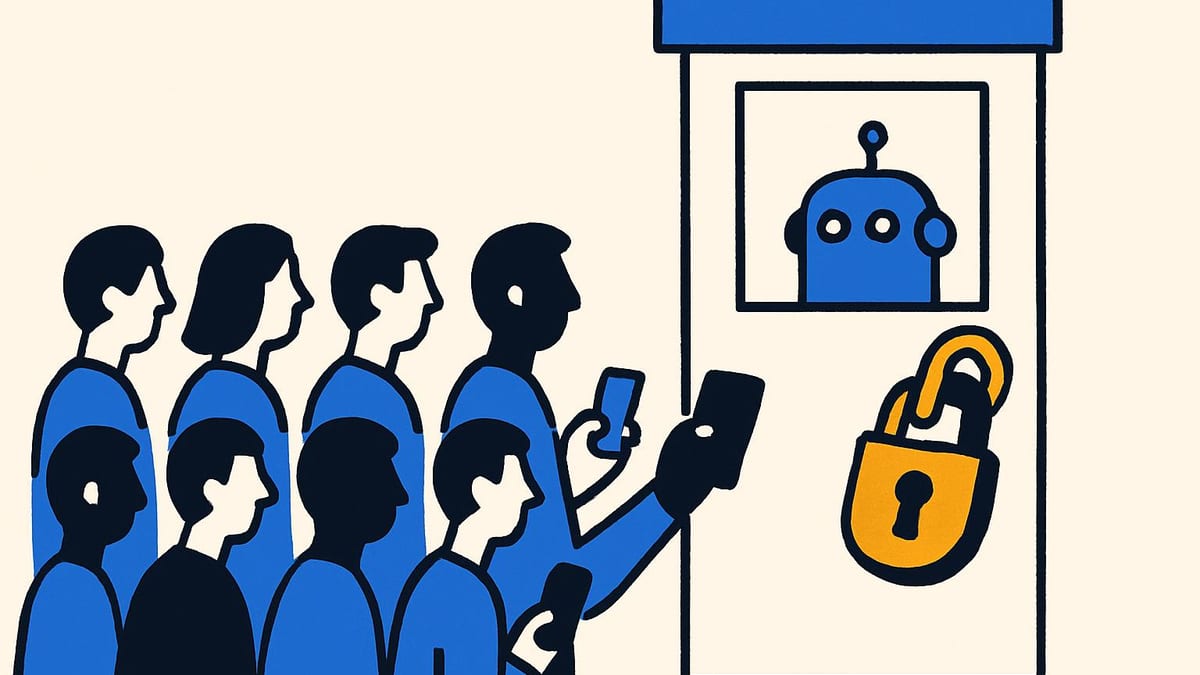
On 5 October 2026 a shopper tried to buy something at Walmart and the site refused him. He posted a screenshot and wrote that Walmart's attempt to stop agents from making purchases had gone so far that it blocked an actual human from buying, and that he could not even sign in. TechCrunch picked it up the next day and noted the real problem for the shopper: it is unclear to the end user whether the block was deliberate, which leaves them frustrated with the retailer and with the agent at the same time.
One login screen, one lost sale, one brand that now reads as closed. That moment is the whole argument of chapter six of CX+AI, and this is part one of two: here I lay out what changed, in part two I get to what you build. The defence Walmart put up was aimed at software. The person who felt it was a customer.
The nine minutes you never see
Your journey now starts without you. In the chapter I follow Elin, who is moving house. Her assistant compares eleven suppliers in nine minutes and brings her two decisions, which take her about forty seconds of attention in total. Nobody visited a website. Nobody saw an advertisement. Nobody was persuaded.
Those nine minutes are where your market share is decided, and they happen on infrastructure you do not control. The forty seconds that follow are a formality.
Amazon is counting what it stands to lose
The platform fight over agents is a fight over the customer relationship. On 20 September 2026 Amazon cut off Meta's new Muse agent from shopping on Amazon.com, citing data security, in what is a larger industry fight over who controls the shopping experience and the customer relationship. Amazon said Meta never obtained permission and that the agent does not identify itself while browsing.
Forbes added the number that explains the urgency: Amazon's sponsored-page advertising brought in about $68 billion last year, roughly 10 percent of total revenue. An agent that reads product data and skips the sponsored results takes that revenue line with it.
Every block is a business decision about who your customer is allowed to bring along.

Your positioning is now a claim that gets checked
The agent reads what you publish and compares it with what you deliver. Brand positioning used to be a message you repeated until it stuck. It is now an assertion that gets verified against price, delivery time, return policy and reviews, inside a comparison you never see.
CivicScience published a benchmark on 15 October 2026 that shows where this sits today: AI shopping adoption at 37 percent, climbing for an eighth consecutive month, with 61 percent of AI shoppers researching on a platform and then buying elsewhere. Your shortlist position is being set somewhere you have no analytics for.
Who has to move
This lands on three desks, and marketing is only one of them. The decisions that determine whether an agent can represent your customer sit with people who have never discussed each other's roadmaps.
- Security and IT own the bot policy that decides who gets in. Cloudflare announced on 1 July 2026 that from 15 September, pages carrying ads have Training and Agent bots blocked automatically, while Search bots stay allowed.
- Product and content own the data an agent reads: specifications, stock, delivery windows, return terms.
- Legal and risk own what an agent is permitted to do on your behalf, and what you accept from one acting for a customer.
Bain reported in March that shoppers trust retailers' own agents three times more than third-party agents. That trust is an asset you can still build on, and it expires.
What you do on Monday
- Ask your CDN or security team which agent categories are currently allowed through, and get the answer as a list of names.
- Put your top ten product pages through a consumer agent yourself and read what comes back about price, delivery and returns.
- Appoint one owner for agent access who reports to commerce, with security advising.
- Add a line to your next board report: what share of traffic arrived through an AI platform, and what it converted at.
Part two covers the build: the data an agent needs, the guardrails that let you delegate, and the way of working that keeps up. If you want to map your own journey from the agent's side before that lands, the Agentic Journey Map walks you through it step by step, and chapter six of CX+AI gives you the full picture of Elin's nine minutes. Bekijk de materialen