
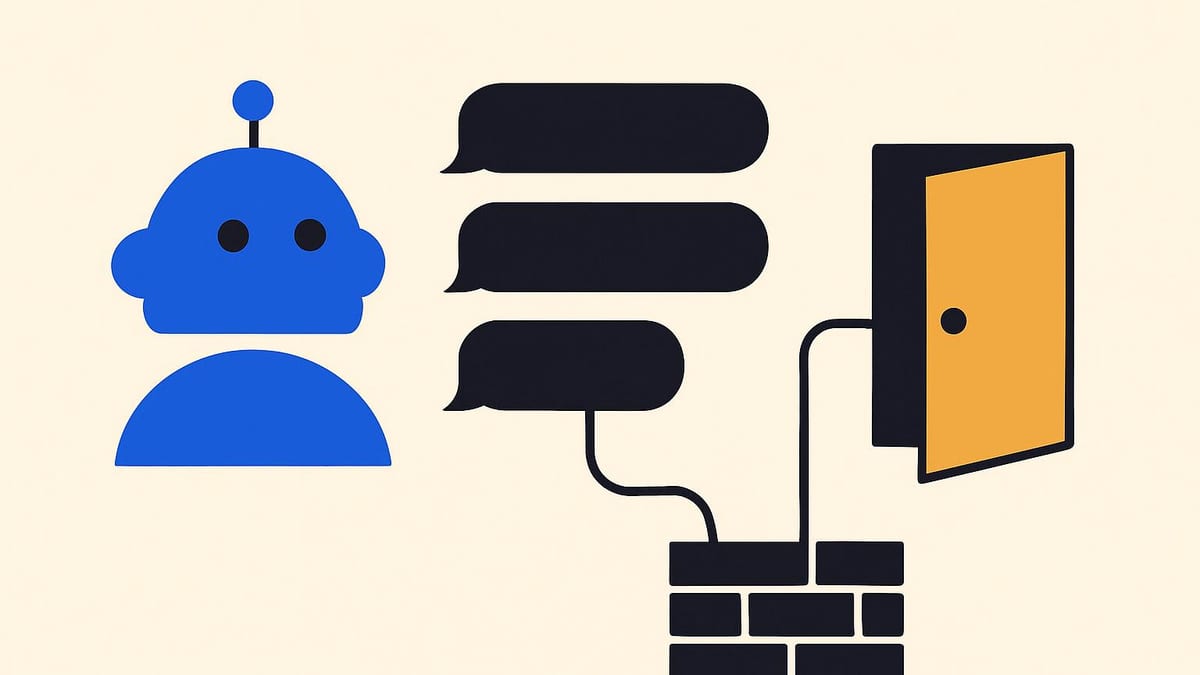
The most common reading of the service data is that customers reject AI, which is why you keep it away from the front line. That reading falls apart the moment you put two numbers from the same research next to each other.
Nearly three in ten consumers call interacting with AI the most frustrating part of doing business with a company. Two thirds of consumers say they would rather solve the problem themselves. Those are the same people, in the same week, with the same issue. What they are telling you is something more specific than dislike, and it has consequences for how you design.
What the numbers actually say
Preference for a human is large, and it sits right next to a preference for self-service. Roughly eight in ten consumers would rather deal with a person, and two thirds believe they get better outcomes from one. Around nine in ten want the option to reach a human at all times. Nearly three quarters walk away from an AI interaction that offers no human option at all.
Put the self-service number back in the picture and the pattern gets clear. People will happily handle their own case, as long as the way out stays visible while they do it. The exit is what makes the self-service usable.
The route to a person is not the failure path. It is the condition that makes the automated path acceptable.
The exit nobody builds
Design your service flow around the assumption that a large share of conversations will need to leave the AI. Accenture found that interactions handled by AI alone fail about two fifths of the time. AI resolution rates across the industry sit around forty percent. That means the majority of conversations end up somewhere else, and that somewhere else is where most of the damage happens.
Five in six customers have to repeat themselves at the handover. The AI has the full transcript, the intent, the account and the sentiment, and the agent starts with a blank screen and the words "how can I help you". A handover that works carries four things across:
- the transcript, visible to the agent before they speak
- the intent the AI identified, with its confidence level
- what the AI already tried and what it ruled out
- the customer's own words for the problem, unparaphrased

Xanterra
High containment and a visible exit live together well. Xanterra reports containment around three quarters, and above eight in ten at Glacier. The assistant they built for their own employees delivered millions in additional revenue.
Containment climbed there because conversations actually ended in an answer. Read as a measure of resolution, it tells you something. Read as a measure of how few people reached a human, it will push you to hide the door, and nearly three quarters of your customers will leave through it anyway.
Being recognised
About half of consumers believe they can tell when they are talking to AI, and among younger customers it is two thirds. That number keeps rising while the effort to disguise the bot keeps costing you design time.
My position is simple: say what it is in the first message, and say what it can do. Customers calibrate their expectations fast. The frustration in the data comes from a system that promised understanding and then looped, which is a different failure from a system that said "I can handle bookings and changes, and I will get you a colleague for anything else."
What you do on Monday
- Pull twenty transcripts where the customer reached a human and count how many had to repeat their problem. That is your handover baseline.
- Put the route to a person in the first AI message, not behind three failed attempts.
- Split your containment metric in two: conversations that ended in an answer, and conversations that ended.
- Write the opening line of your assistant so it names itself and names its scope in one sentence.
- Check the four handover items above against what your agent's screen actually shows.
You now have a baseline and a handover gap, and the next step is mapping where in the journey the AI holds the conversation and where it hands over. The Agentic Journey Map in the CX+AI materials gives you that layout, including the decision points where the exit belongs. View the materials