
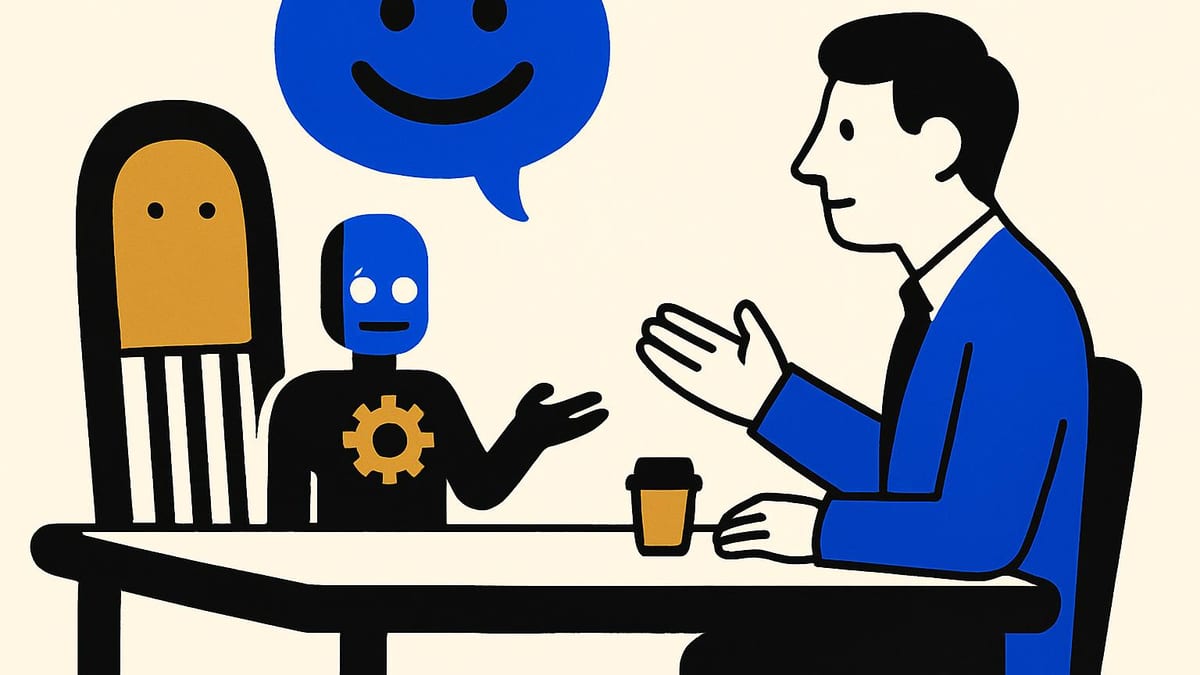
A transformation that outlives its champions
The question a leadership team actually asks about AI is not strategic, it is practical: how do we know this is working? Most answers point at tooling, licences and a pilot that looked good in a slide. The answer that holds up is simpler. Your transformation has worked when the new way of working survives the departure of the people who pushed it.
That test is brutal and it is useful. Take your three most enthusiastic people off the project for a month and watch what happens to the work. Whatever keeps running is your transformation. The rest was enthusiasm.
The question behind the question
What the board really wants to know is whether this becomes the way we work or stays a side project. Pilots rarely fail on technology. They fade because the person who carried them got promoted, got busy, or left. In a company without a data team, that risk is concentrated in one or two people, which makes it worth naming out loud in the first week.
So write down the exit condition at the start. Which task runs the new way, by whom, and how do you see it in the numbers without asking anyone.
Where AI breaks classic change management
Five things make AI different from a merger, a new system or a reorganisation.
- The pace. Your change programme runs in quarters and the technology moves in weeks.
- Rational self interest. You are asking people to automate a part of their own job, and their hesitation is sound reasoning.
- Shadow adoption. Part of your staff already started, on personal accounts, outside your sight.
- The invisible burning platform. Nothing is on fire this quarter, which removes the usual lever for urgency.
- No target group. There is no department to roll this out to, because it touches every role.

The order that works
There is a sequence, and skipping ahead to scale is what kills most programmes. Start with a North Star that a warehouse worker can repeat. Then begin small, with one task that annoys people every day. Find a real sponsor, someone who spends political capital and shows up when it gets awkward. Build one success story with a name and a number attached.
Then make noise about it internally, more noise than feels comfortable. Pick up the early adopters who come to you after that noise. Give them a stage so others carry the story for you. Scaling is the last step, not the first.
A new way of working counts as adopted when nobody has to defend it anymore.
Show, do together, do alone
Adoption has a mechanic, and it fits in one hour a week. First you show it: someone does a real task live, including the moment the output is wrong. Next session you do it together, two people at one screen on their own work. The session after that they do it alone and bring the result back for a quick review.
Three rounds, three weeks, one task. That beats any training day, and you can run it without a data team.
The frozen middle
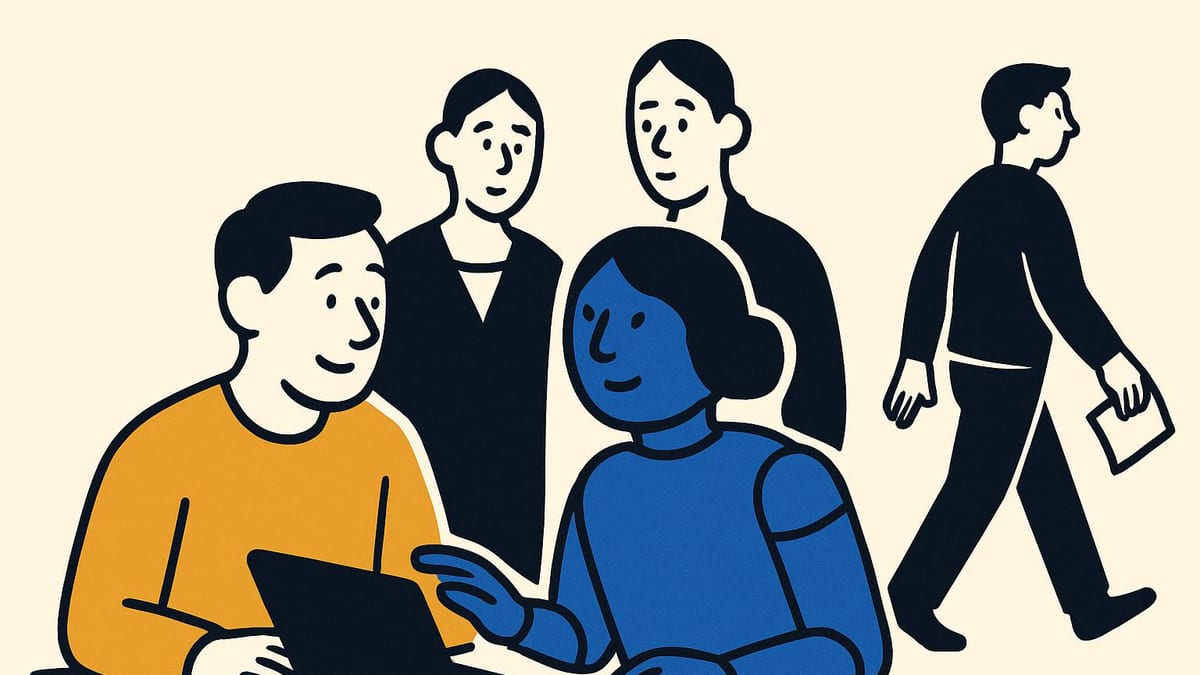
Your middle layer is the group AI threatens most, and it is the group you are asking to lead the adoption. Coordinating, checking, reporting and passing things on is exactly what the technology absorbs first. Pretending otherwise costs you their trust.
Give them a role in the new structure before you give them a task in the transformation. Let them own the adoption in their team, with the decision rights and the credit that go with it.
What you do on Monday
- Write your exit condition: which task runs the new way three months from now, measured how.
- Ask five people what they already use on their own account, and promise no consequences.
- Pick one task that irritates people daily and schedule the first show session this week.
- Name a sponsor who will spend capital, and tell them that in those words.
- Give one middle manager ownership of adoption in their team, including the decision rights.
The sequence in this piece is the short version of the transformation chapter in CX+AI. The CX+AI Transformation Roadmap lays out the same steps with the checkpoints per phase, so you can see where your own programme currently stands. View the materials